

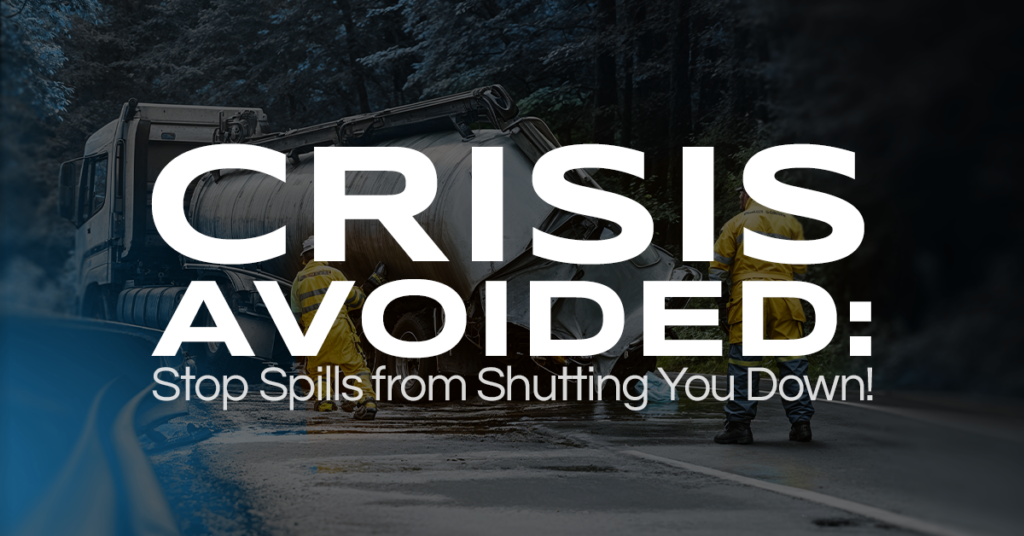
☣️ Hazmat Risks: Why One Spill Can Shut You Down
So, you think a hazmat mishap is just a spill? Think again. One slip-up with dangerous materials—whether it’s a loose lid in a warehouse or a leak on I-95—it doesn’t just make a mess. It can shut down operations overnight, drown you in fines, and, let’s be real, turn lives upside down. These incidents? They don’t pop out of thin air. They’re born from skipped steps, rushed jobs, or teams caught flat-footed. And here’s the kicker: hazmat safety isn’t about passing inspections with flying colors. It’s about shielding your crew, your business, and the world we live in.
But rules alone won’t save you. Sure, you’ve memorized the regs—but what happens when things go sideways? True safety isn’t a checklist; it’s muscle memory. Picture this: storage that’s airtight, spill drills your team could run in their sleep, and every person from the warehouse floor to the driver’s seat knowing exactly how to react when chaos hits. Sounds intense? Maybe. But when it comes to hazmat, “good enough” might as well be a time bomb.
That’s where this guide steps in. We’re breaking down the must-knows—no fluff, no jargon. You’ll get storage hacks to keep risks locked down, emergency blueprints for both warehouse squads and CDL pros, and even the lowdown on snagging that hazmat endorsement (because who doesn’t want to level up their career?). Let’s cut through the noise together, because with hazmat, “figuring it out as you go” isn’t just risky—it’s reckless.
🏭 Spill Response Protocols for Warehouse Supervisors: Contain, Control, & Comply
That drip in the corner? Yeah, that one. A small warehouse leak might look harmless at first glance—until it snakes its way across the floor, morphs into a toxic cloud, or (here’s the nightmare) meets a stray spark. Let’s cut to the chase: hazmat spills don’t play by “slow and steady” rules. They blow up faster than you can say ‘evacuate’—literally. And when they do? There’s no time to freeze up. For warehouse supervisors, a razor-sharp spill response isn’t just best practice—it’s the thin line between “contained and cleaned” and “calling the fire department while OSHA drafts your citation.”
But here’s the cold, hard truth: Preparation doesn’t start when the alarm sounds. It starts now. From spotting a leak’s telltale signs (is that puddle growing or is it just you?) to locking down the zone and scrubbing every trace of contamination—every. single. step. has to be clockwork. Miss one beat, and suddenly you’re not just mopping up a mess; you’re managing a crisis.
Ready to ditch the guesswork? Below, we’re laying out the spill response playbook every warehouse leader needs. We’re talking life-saving protocols, downtime-slashing tactics, and how to keep regulators off your back. No jargon, no fluff—just the gritty details that’ll turn your team from “Uh-oh…” to “We’ve got this.”
🔔 Immediate Hazard Assessment
- Stop, look, and assess—identify the substance before reacting. Is it flammable, corrosive, or toxic?
- Secure the area immediately. Alert employees and restrict access to prevent exposure.
🛑 Contain the Spill Quickly
- Use spill containment kits, booms, or absorbent socks to stop the spread.
- For large spills, use floor barriers or dikes to prevent hazardous substances from reaching drains.
🧑🔬 Proper PPE is a Must
- Employees handling spills should wear gloves, respirators, and protective clothing as required by the material’s hazard classification.
- Ensure emergency eye wash stations and showers are accessible if dealing with corrosive chemicals.
📄 Follow Reporting & Documentation Procedures
- Every spill—big or small—should be logged for compliance and future risk assessments.
- If the spill is significant, notify OSHA, the EPA, or local authorities as required.
🧹 Decontamination & Disposal
- Use the correct neutralizers and absorbents based on the spilled substance. Never mix incompatible materials!
- Dispose of contaminated materials in accordance with hazardous waste regulations—never throw them in regular trash bins.
Let’s get one thing straight… Managing hazmat spills isn’t about playing cleanup crew, it’s about playing chess with disaster. A well-trained team isn’t just a perk, it’s your insurance policy. Throw in split-second decisions and the right gear, and you’ve got the trifecta that turns a “Code Red” into a “Lesson Learned.” But here’s the rub: hesitate, and that minor incident becomes a front-page crisis faster than you can say ‘evacuation radius.’
Now, imagine this nightmare scenario: You’re not in a warehouse with spill kits and eye wash stations. You’re on a packed highway, 300 miles from backup, and your trailer’s leaking something that could melt asphalt. On the road, hazmat spills aren’t just spills—they’re a high-stakes game of chance. Drivers aren’t just operators; they’re first responders with a CDL. One wrong move? You’re not just risking fines, you’re risking lives.
Ready for the hard truth? The clock’s ticking the second a leak starts. No safety nets. No “wait for the experts.” Just you, your training, and the open road. So let’s ditch the warehouse playbook and talk real-world survival: What do drivers actually need to do when hazmat hits the fan mid-haul? Buckle up—we’re breaking it down, mile marker by mile marker.
🚛 Spill Containment & Response for CDL Drivers: When Seconds Matter
Picture this: You’re hauling a hazmat load when your gut says ‘nope’—maybe it’s a whiff of something chemical, a ghostly vapor trail, or a dashboard light screaming at you like a toddler mid-tantrum. You pull over, pop the trailer, and boom: there’s your worst nightmare, pooling on the asphalt. No backup. No time to Google “WTF do I do now?” What happens next? Let’s just say it’s not just your cargo on the line—it’s your license, your livelihood, and the semi driver tailgating you who’s texting their ex.
Here’s the cold truth: Handling a hazmat spill on the road isn’t about dotting i’s for DOT inspectors. It’s about playing 3D chess with disaster while the clock’s ticking. Hesitate? You’re flirting with career-ending fines, fiery headlines, or worse—a highway turned toxic. Mess up containment? That “small leak” becomes a “breaking news” segment faster than you can say “Class 3 flammable.”
Bottom line? If you haul hazmat, you don’t just need to know the drill—you need to own it. Below, we’re tearing into the make-or-break steps every driver must master: from locking down a spill zone to dodging FMCSA hell. Forget “minor disasters”—let’s talk survival.
🚦 Pull Over & Assess the Situation
- If a hazardous material leaks during transport, stop safely—preferably on level ground away from traffic.
- Check for visible leaks, vapor clouds, or unusual smells before exiting the cab.
📞 Notify Dispatch & Emergency Services
- Contact your dispatcher and report the nature and extent of the spill. If it poses immediate danger, call 911.
- Provide hazmat placard details, manifest information, and location details to first responders.
💨 Ventilation & Fire Prevention
- If transporting flammable materials, avoid sparks, flames, or electrical activity that could ignite vapors.
- Open vents and keep doors secured to prevent vapor buildup inside the trailer.
🚧 Secure the Area
- Set up hazard cones or emergency triangles to warn other drivers and keep bystanders away.
- Use emergency spill kits if safe to do so, but never attempt cleanup without proper PPE.
📑 Follow DOT & FMCSA Regulations
- Hazmat spills must be reported to the National Response Center (NRC) if they exceed the reportable quantity (RQ).
- Maintain an up-to-date Emergency Response Guidebook (ERG) in your cab for quick reference.
Let’s cut through the smoke: A hazmat spill on the road isn’t just an “oops” moment—it’s a live grenade with your name on it. Those first few minutes? They’re not about protocol; they’re about survival. One misstep, and you’re not just cleaning up a mess—you’re starring in a DOT investigation, a viral news clip, or a funeral no one wants to plan.
But here’s the kicker—does your training start when the sirens blare?
Spoiler: It shouldn’t. Even seasoned pros crack under pressure if they’re winging it. Think about it: When a trailer’s spewing corrosive gunk at mile marker 82, there’s no time for pep talks or panic rooms. Your team’s response needs to be drilled into muscle memory, like a pilot landing a plane with engines out.
So, what’s the fix? Forget “routine training.” Think war games. Updated compliance drills? Non-negotiable. Hands-on spill sims? Mandatory. Because when the pressure’s on, your crew won’t rise to the occasion—they’ll default to their training. And if that training’s half-baked? Well, let’s just say hope isn’t a strategy.
Bottom line: Building a spill-ready workforce isn’t about checklists—it’s about crafting instincts. Instincts that turn “Oh god, what now?” into “We’ve trained for this.” Ready to turn your team from reactive to rock-solid? Let’s break down the blueprint.
🎓 Training & Preparation: Building a Spill-Ready Workforce
When hazmat hits the fan, confusion and panic aren’t just bad looks—they’re ticking time bombs. Picture this: a warehouse worker frozen mid-spill like a deer in headlights, or a driver fumbling with a leaky drum on I-80 as traffic whizzes by. In high-risk zones like these, a slow response turns a “manageable oops” into a “Code Red” faster than you can say “evacuate.” So, what’s the secret sauce? Training. Not the “watch this PowerPoint and sign here” kind, but the “we’ve drilled this until it’s in our bones” kind.
Here’s the thing: Safety isn’t just about gear gathering dust in a corner. It’s about knowing how to wield that gear like a pro when sweat’s dripping down your neck and the clock’s screaming. Think of it like a fire extinguisher: having one on the wall won’t save you if no one knows how to pull the pin. That means hands-on drills that stick, spill kits that aren’t just for OSHA photo ops, and compliance updates that don’t put you to sleep.
Whether you’re running a warehouse tighter than Fort Knox, hauling hazmat across three states, or playing logistics maestro, prep isn’t a suggestion—it’s the lifeline. Want your team to go from “Uh, what’s the protocol again?” to “I’ve got this”? Here’s the playbook to build a spill-savvy squad that doesn’t just survive chaos… they crush it.
📚 Regular Safety Drills
- Conduct spill response training every quarter—hands-on practice builds confidence and muscle memory.
- Use real-world case studies to reinforce best practices, highlight common mistakes, and improve response times.
🛠️ Stock & Maintain Spill Kits
- Every warehouse and truck transporting hazardous materials should have a fully stocked spill kit with absorbents, gloves, goggles, and containment materials.
- Inspect kits regularly, replacing expired or depleted materials to ensure they’re always ready for use.
📝 Stay Up to Date on Compliance Regulations
- DOT, OSHA, and EPA guidelines are frequently updated—employees must stay informed to ensure compliance.
- Supervisors should schedule annual training refreshers to reinforce key protocols and keep teams prepared.
🚨 Emergency Contact Lists
- Maintain up-to-date lists of emergency contacts, including local fire departments, hazmat cleanup crews, and compliance officers.
- Ensure all employees know who to call, how to report spills, and when to escalate response efforts.
A well-trained workforce isn’t just a safety checkbox—it’s a down payment on accident-free operations, buttery-smooth workflows, and staying off OSHA’s naughty list. When hazmat spills strike, companies with drilled-in protocols bounce back before the spill dries. Those winging it? They’re left scrambling—bleeding cash, burning rep, and dodging regulators like a game of bureaucratic whack-a-mole.
Hazmat safety doesn’t start when alarms blare—it starts with baking preparedness into your team’s DNA. Whether you’re strapping down volatile cargo in a warehouse colder than a tax auditor’s smile, hauling pressurized tanks across state lines, or coaching new hires to treat spills like live grenades, the rule’s the same: Prep isn’t a policy—it’s a reflex. Nail it, and accidents don’t just drop—they flatline.
🚛 Securing Safety & Opportunity: The Road Ahead
Let’s get real: Hazmat safety isn’t about ticking a compliance box—it’s about building a workplace where accidents don’t stand a chance. Why? Because everyone’s on the same page, dialed-in, and ready to act like it’s second nature. Sure, regulations are the guardrails, but what actually keeps folks safe? Training that sticks. Awareness that’s razor-sharp. And a no-BS commitment to doing things right, even when nobody’s watching.
If your team’s prep feels even slightly shaky? That’s your cue. Hit refresh on training. Tear up those dusty response plans. And drill until “What now?” becomes “I’ve got this” for every worker, driver, and supervisor. Because in the hazmat world, confidence isn’t just nice to have—it’s the difference between “close call” and “catastrophe.”
🔥 Got a hazmat horror story or a genius save? Drop it below! The best lessons come from the trenches, and hey—your story might just stop someone else’s “oh crap” moment. 👇
Hungry for more? Swing by next week for no-nonsense safety hacks, industry deep dives, and career tips that’ll make your LinkedIn profile look like a rockstar’s. Stay sharp, stay safe, and keep those wheels turning. 🛑➡️🚛
Ready to shift your career into high gear? Optimum Staffing Solutions offers a world of opportunities designed to match your ambitions. Whether you’re a veteran CDL driver looking for new roads to conquer, an aspiring recruiter, or an industrial professional eager to innovate in manufacturing, we are here to guide your journey. Picture yourself thriving in roles that range from machine operation and production to leadership and administration. Imagine being part of a team where logistics and warehouse experts, including dispatchers, inventory specialists, and operations managers, work seamlessly to create unparalleled efficiency. Your next career move isn’t just a job; it’s a pathway to success. Join us and let’s drive towards a brighter future together!
🔎 For Businesses Seeking Top-Notch Talent:
Finding the right talent can be as complex as navigating the busiest intersections, but Optimum Staffing Solutions simplifies the journey. We are your trusted partner in connecting your business with professionals who excel in their fields and are passionate about driving your success. Whether you need skilled CDL drivers to navigate critical routes, machine operators to maintain production flow, payroll administrators to manage financial efficiency, or healthcare professionals to deliver exceptional patient care, we have you covered.
Our curated talent pool includes IT specialists to fortify your tech infrastructure, retail managers to transform customer experiences, and construction project managers ensuring quality infrastructure. With tailored solutions that perfectly fit your business needs, explore our comprehensive staffing services today and discover how we can help keep your operations running smoothly and efficiently. If you’re in search of a role, be sure to check out our open positions. Additionally, if you need direct hire staffing solutions for commercial driving or industrial positions, be sure to explore our offerings.
We extend our heartfelt thanks to you for engaging with this post. Safe travels and successful ventures to all our readers. Whether you’re hitting the road or mastering the craft on the manufacturing floor, remember, Optimum Staffing Solutions is here to support your journey every mile and milestone of the way.
If you made it to this part of the post, we’d just like to take a moment to thank you for taking the time to read this article. Be safe out there and as always, If you’re in search of a role, be sure to check out our open positions. And if you need staffing solutions for commercial driving or industrial positions, be sure to explore our offerings.